
UNUJA Graduate School Conducts OBE-Based Curriculum Workshop for Doctoral Program in Islamic Educational Management
Wednesday, 1 July 2026
Accessed: 274 time
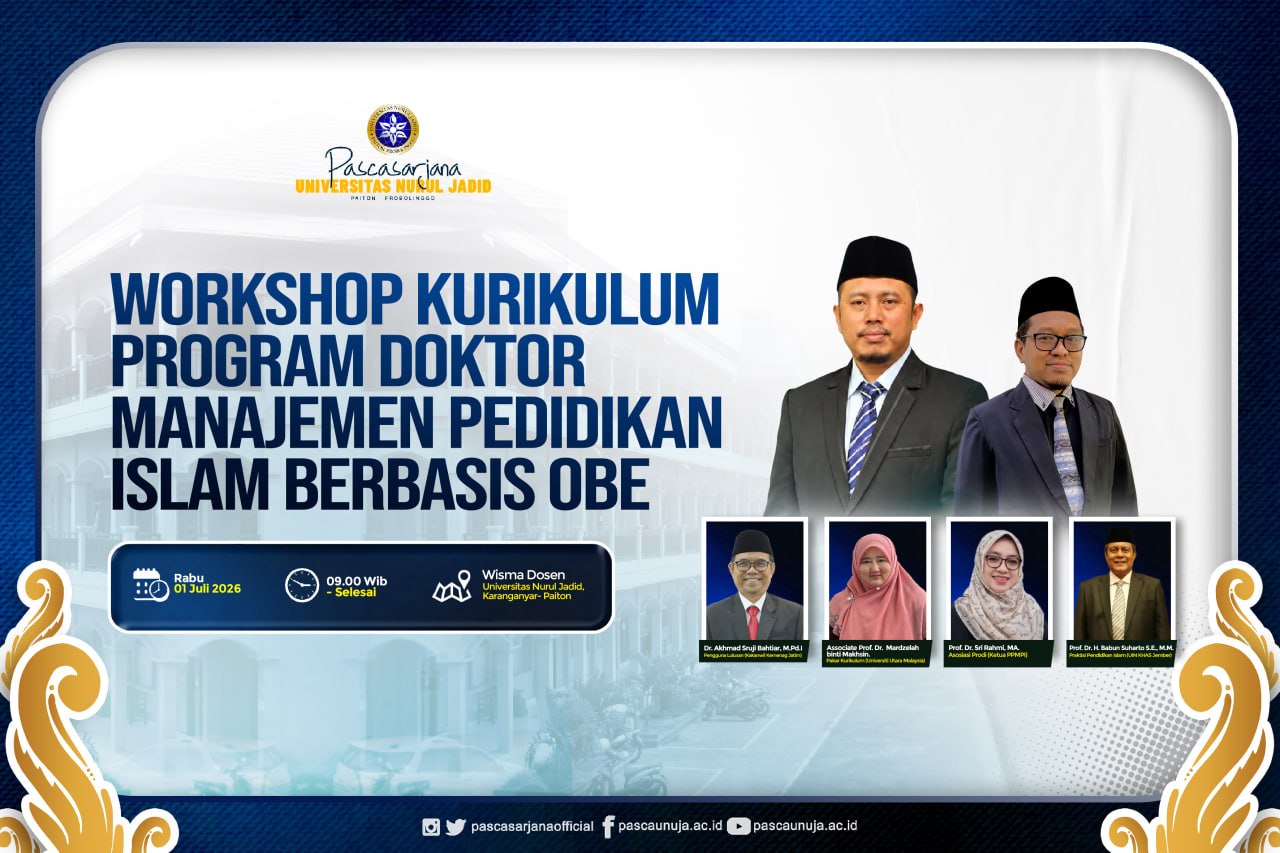
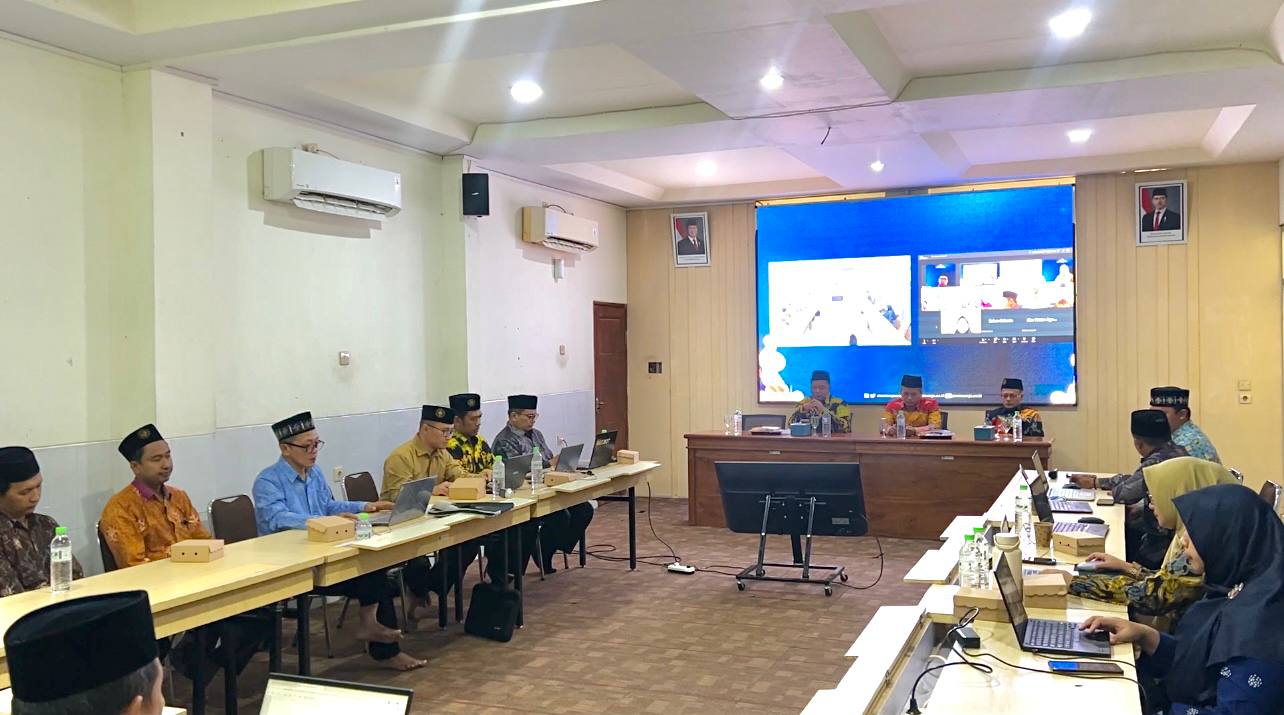
Paiton, Wednesday (July 1, 2026) — The Graduate School of Universitas Nurul Jadid (UNUJA) has demonstrated a swift and responsive initiative following the issuance of the Decree on the Establishment Permit for the Doctoral Program in Islamic Educational Management (S3-MPI), Number 103 of 2026. As a follow-up, the Graduate School organized an Outcome-Based Education (OBE)-based curriculum workshop for the S3-MPI program, held in a hybrid format at the UNUJA Lecturers’ Hall, integrating both offline and online participation.
This activity aimed to design a doctoral curriculum that is systematic, measurable, and aligned with contemporary demands. Through the OBE approach, the curriculum is structured to ensure that graduates not only possess strong theoretical foundations but also demonstrate practical competencies in research, leadership, and problem-solving within the field of Islamic education. Furthermore, the workshop is expected to strengthen the academic quality of the Graduate School and enhance the competitiveness of its graduates at both national and international levels.
In his remarks, the Director of the Graduate School, Dr. H. Akmal Mundiri, M.Pd., emphasized that this initiative represents a strategic step in establishing a solid academic foundation for the doctoral program. He highlighted that the workshop provides significant benefits, particularly in improving curriculum quality, strengthening academic governance, and ensuring institutional readiness to deliver excellent and adaptive doctoral education.
Meanwhile, the Vice Rector III of UNUJA, Prof. Dr. H. Hasan Baharun, M.Pd., who officially opened the event, underscored the importance of outcome orientation in higher education. He asserted that the curriculum must produce graduates who are not only academically competent but also capable of making meaningful contributions to society. He further emphasized that the concrete objective of this initiative is to produce doctoral graduates who are competent, capable of leadership, and actively engaged in addressing the challenges of Islamic education in a global context.
The workshop also featured several reviewers from national and international backgrounds. Prof. Dr. H. Babun Suharto, MM., an expert in Islamic education practice, emphasized the importance of developing an applicable curriculum with tangible impacts in real-world settings. Meanwhile, Prof. Dr. Sri Rahmi, MA., Chair of the Indonesian Association of Islamic Educational Management Study Programs and an assessor of LAMDIK, highlighted the necessity of aligning the curriculum with accreditation standards and clearly defined graduate learning outcomes.
Additionally, the Head of the Regional Office of the Ministry of Religious Affairs of East Java, Dr. H. Akhmad Sruji Bahtiar, M.Pd.I, provided strategic insights, stating that the development of an OBE-based curriculum is highly relevant to current needs. He emphasized the importance of producing graduates who are not only academically excellent but also demonstrate integrity, professionalism, and readiness to respond to the dynamic challenges of Islamic education in society. He also stressed the importance of synergy between higher education institutions and the government in enhancing the quality of competitive religious human resources.
From an international perspective, Associate Prof. Dr. Mardzelah binti Makhsin from Universiti Utara Malaysia emphasized the importance of global standards and opportunities for international collaboration in OBE-based curriculum development, ensuring that graduates possess global competitiveness.
A total of 20 participants, consisting of permanent lecturers, practitioners, and graduate users, actively contributed to the workshop. The involvement of these diverse stakeholders represents a crucial step in ensuring that the developed curriculum is not only academically robust but also relevant to labor market demands and societal needs.
Through this initiative, the Graduate School of UNUJA not only focuses on curriculum development but also reinforces its commitment to delivering high-quality and impactful doctoral education. For the Graduate School, this activity serves as a foundation for enhancing academic quality and program readiness. For UNUJA, it represents a strategic effort to strengthen its position as a competitive and excellent higher education institution. For society, the presence of a high-quality doctoral program is expected to produce educational leaders who are innovative, solution-oriented, and responsive to contemporary challenges.
Related News

Jl. PP Nurul Jadid, Dusun Tj. Lor, Karanganyar, Kab. Paiton, Probolinggo Regency, East Java 67291
+628883077077pasca@unuja.ac.id